Skin, makeup, and nails in one connected beauty system

Free express shipping on orders over $50

Take our personalized skin quiz

Amara Cole — portrait

Deep skin tone makeup

Amara Cole

Atlanta beauty creator documenting base, blush, and lip color on deeper skin tones without heavy retouching.

12 stories

Story

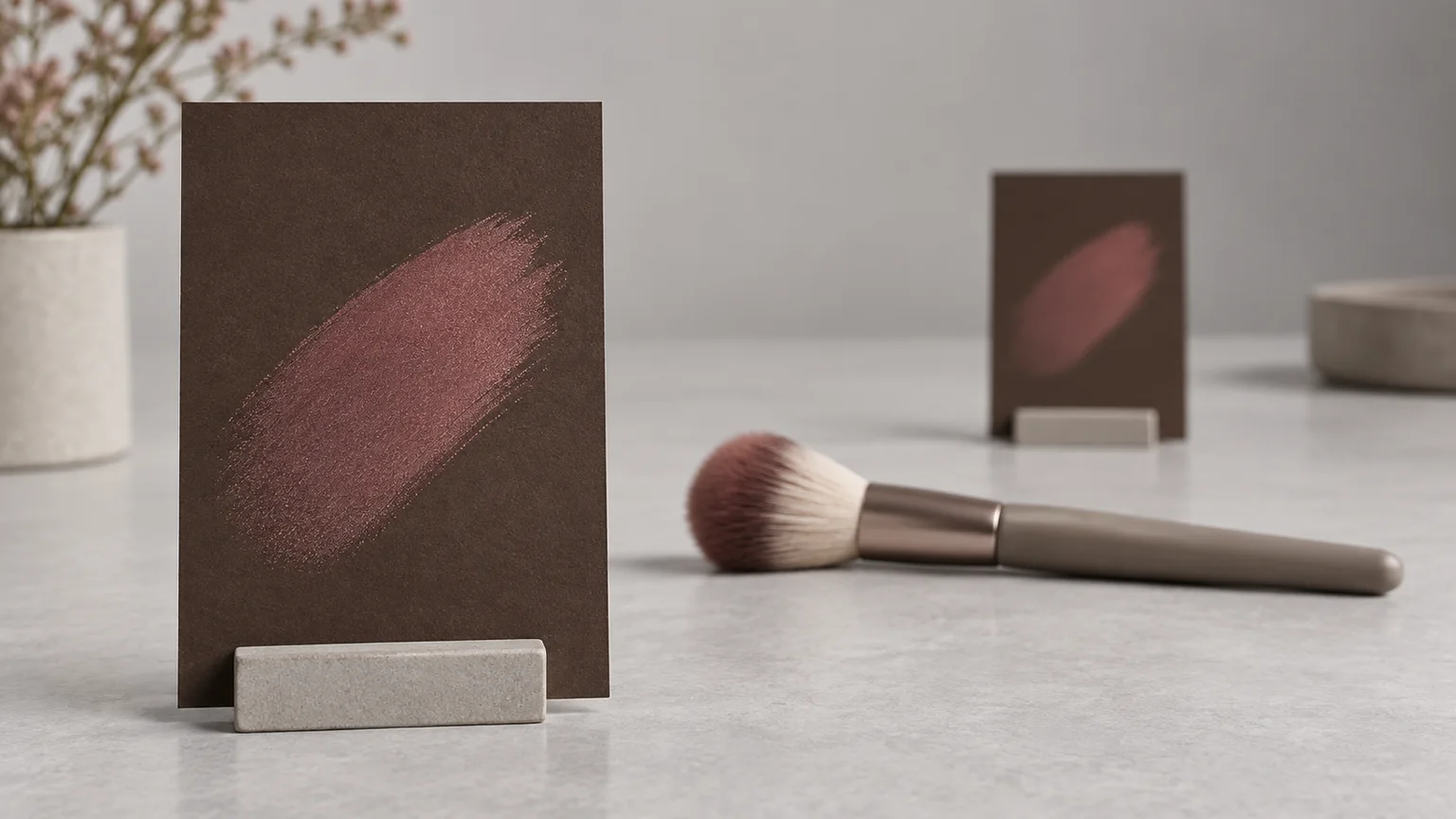
Assess Blush Visibility on Deep Skin at Conversation Distance
Assess Blush Visibility on Deep Skin at Conversation Distance

Assess blush on deeper skin at the distance where people normally see your face, not only close to the mirror. A close-up can show texture and edges, while a farther view helps you judge the visible color. Neither requires assuming that deeper skin always needs the strongest pigment available.

Begin with a Visible Question

Choose the effect you want: a soft color wash, a clear cheek statement or a reflective finish. These goals are different. A highly reflective blush can be noticeable because of its sheen even when the color is subtle; a matte blush can show a strong hue without shine.

Apply a small amount following the formula's directions. Pause before building, especially when trying a new product or tool. Compare the actual color on the base you are wearing rather than relying only on how concentrated it looks in the pan.

Step Back and Turn

Look at conversational distance, then turn slightly to inspect the edges. Is the hue visible where you want it? Does one area look like a concentrated patch? Is the reflection making the color harder to read from one angle? Move between these views before adding another layer.

Record What Changed

If you prefer more visible color, build only as the product permits and keep track of the application. If an edge is too sharp, address that edge rather than covering a larger area. Note the shade, tool and base combination. The useful result is a repeatable personal preference, not a claim that one pigment level suits every deep complexion.

Questions About This Edit

Does deep skin require a highly pigmented blush?

Not in every case. Formula, shade, coverage, base and your preferred intensity all matter. Compare the actual visible result instead of choosing by pigment claims alone.

Is a close-up enough to assess blush placement?

It helps with detail, but also step back to see the relationship with the whole face. Check both the color and its edges.
Explore the makeup studio | Read the beauty guides

Story

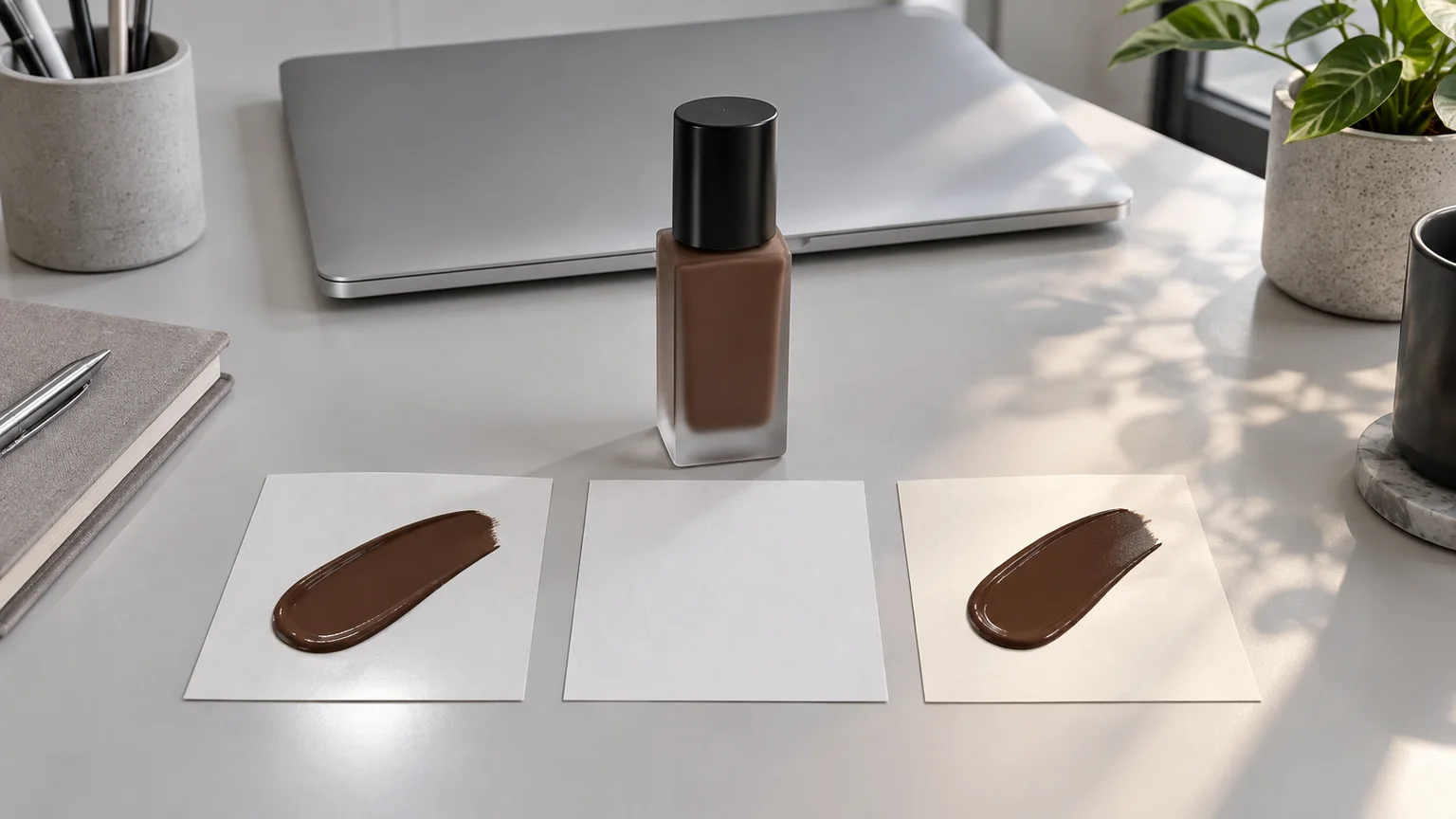
Check a Deep-Tone Base Under Bright Office Lighting

Check a Deep-Tone Base Under Bright Office Lighting

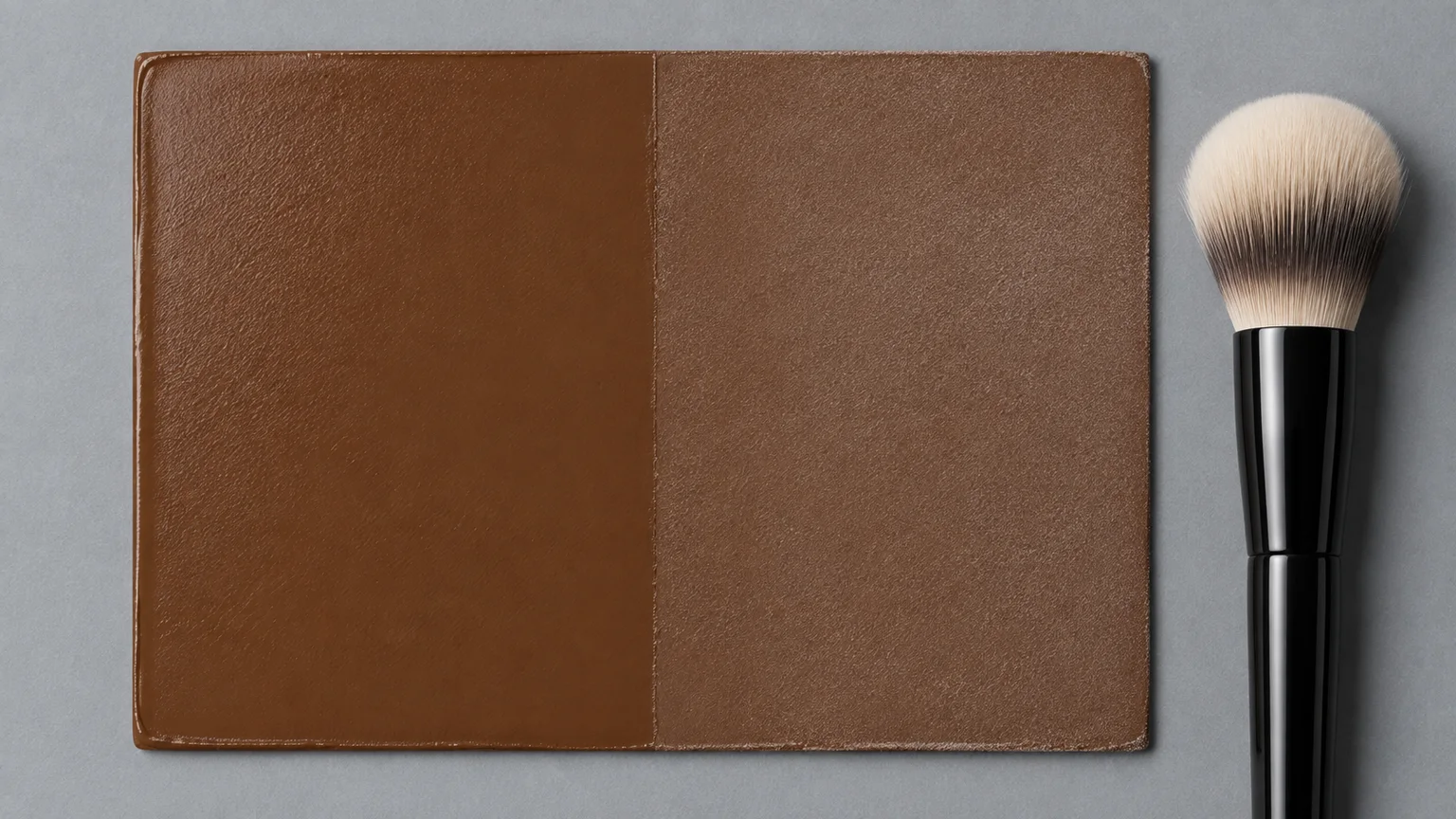
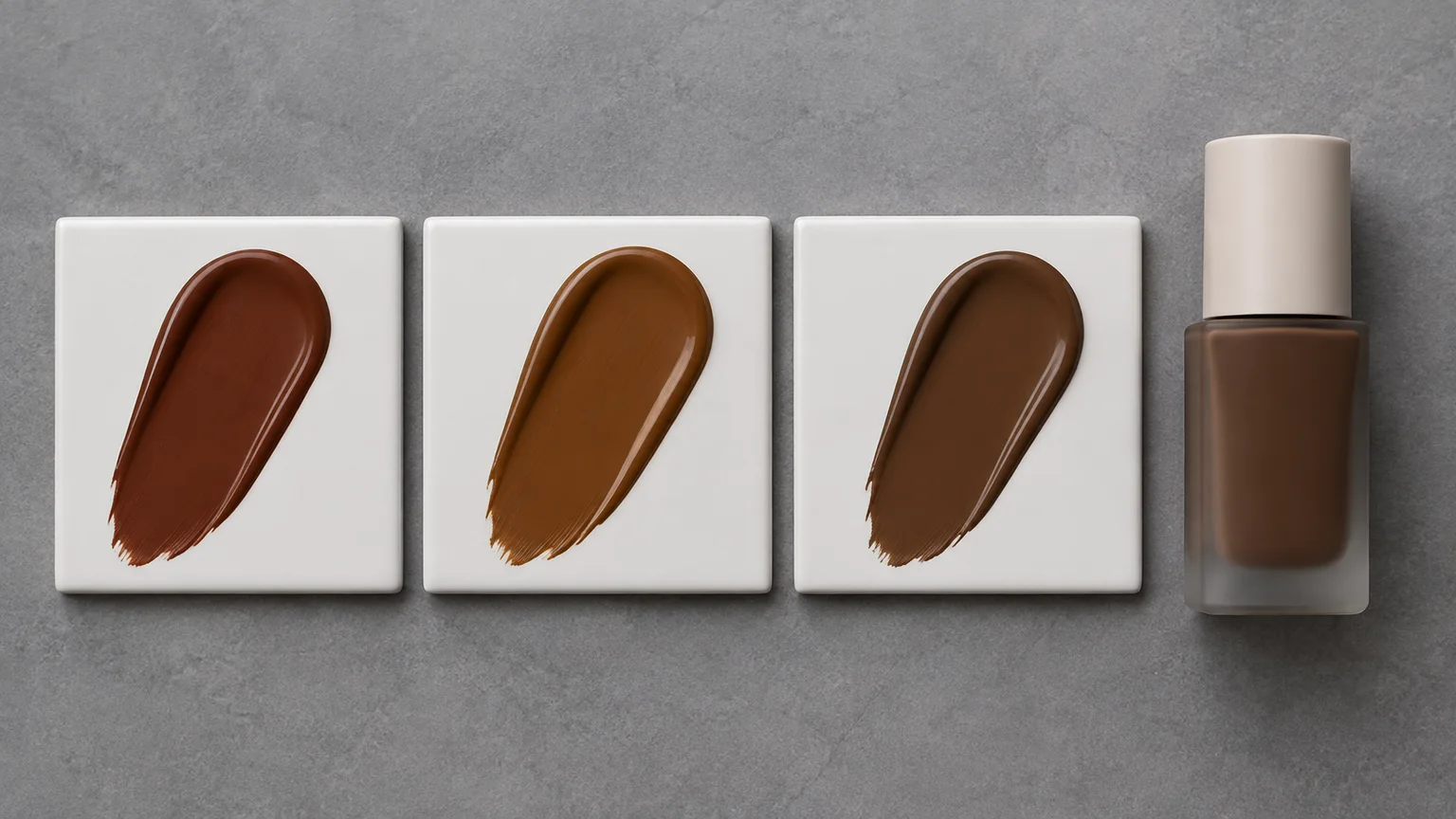
Bright office light can change how a familiar base appears. Before replacing a foundation that looks different at your desk, separate the lighting from the color, coverage and reflection of the makeup. One phone camera view is not enough to decide that a shade no longer fits.

Use Two Relevant Views

Look in an ordinary mirror under the office light, then compare with indirect daylight when available. Keep the makeup unchanged between those views. Note whether the whole face changes color with the surroundings or whether one area of product has a distinct edge.

A camera may adjust exposure and color automatically. Use a photograph as a record of that camera's result, not as an absolute reading of your skin. Filters and portrait effects make a careful comparison harder.

Name the Visible Difference

Does the base appear lighter than the neck transition you chose? Is a small area more reflective under an overhead light? Are you noticing coverage around the mouth rather than a shade mismatch? These are different observations and do not call for the same adjustment.

Make One Deliberate Change

If reflection is the concern, consider a targeted finish adjustment instead of changing the entire foundation shade. If the color remains unsuitable in several relevant views, compare another candidate at similar coverage. Keep the rest of the routine steady for that comparison.

There is no universal three-step office base for deeper skin tones. Record the actual formula, shade and setting so that a useful observation does not become another unnecessary shopping rule.

Questions About This Edit

Should office makeup always be matte?

No. Finish is a preference. Decide which reflections you enjoy in the setting instead of assuming that all shine needs to be removed.

Does a video call show the true foundation shade?

Not necessarily. Camera processing, screen settings and room lighting can change its appearance. Compare with an unfiltered mirror view as well.

Explore the makeup studio | Read the beauty guides

Story

Layer a Brown-Pink Lip Color Over Naturally Pigmented Lips

Layer a Brown-Pink Lip Color Over Naturally Pigmented Lips

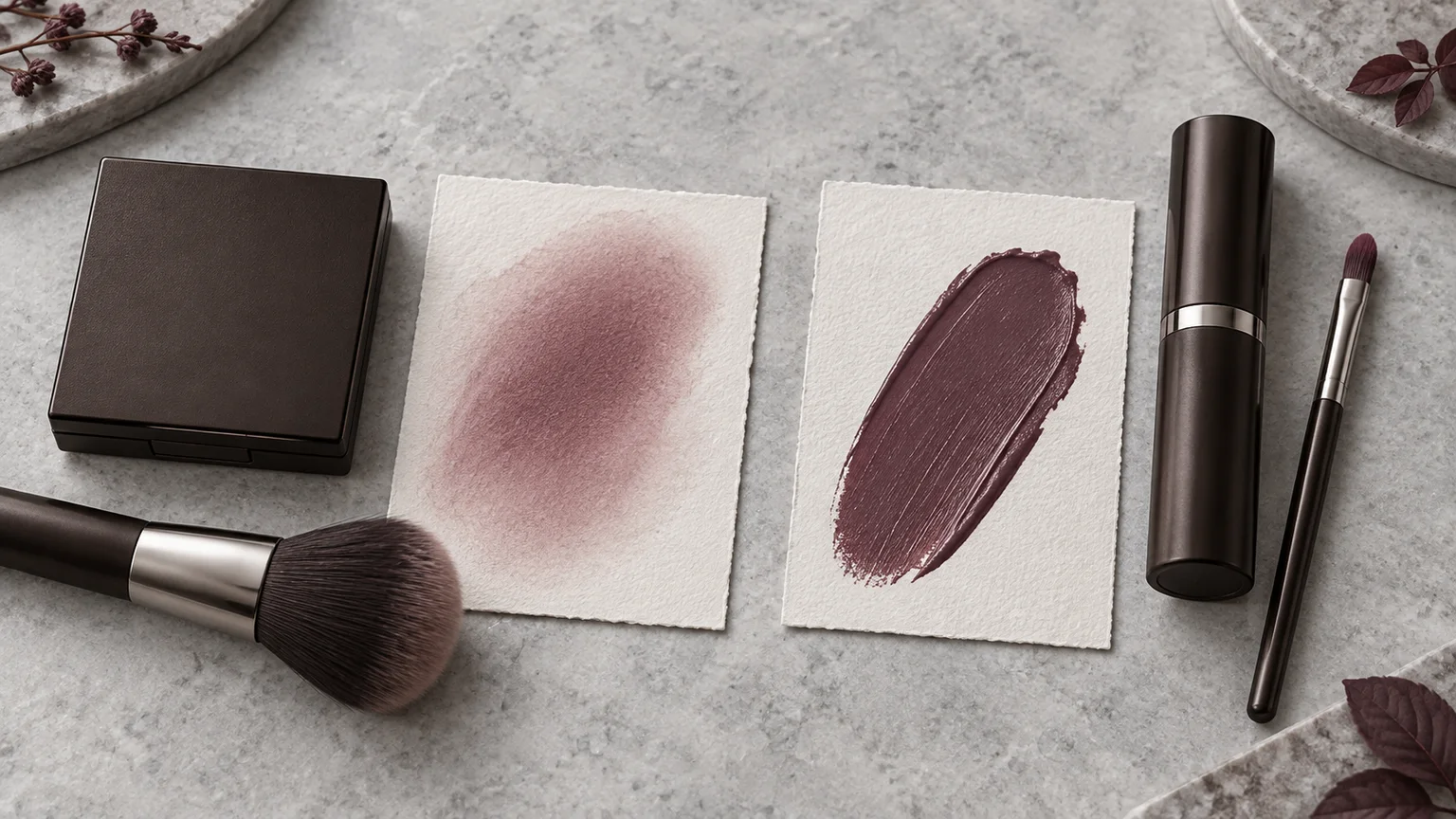
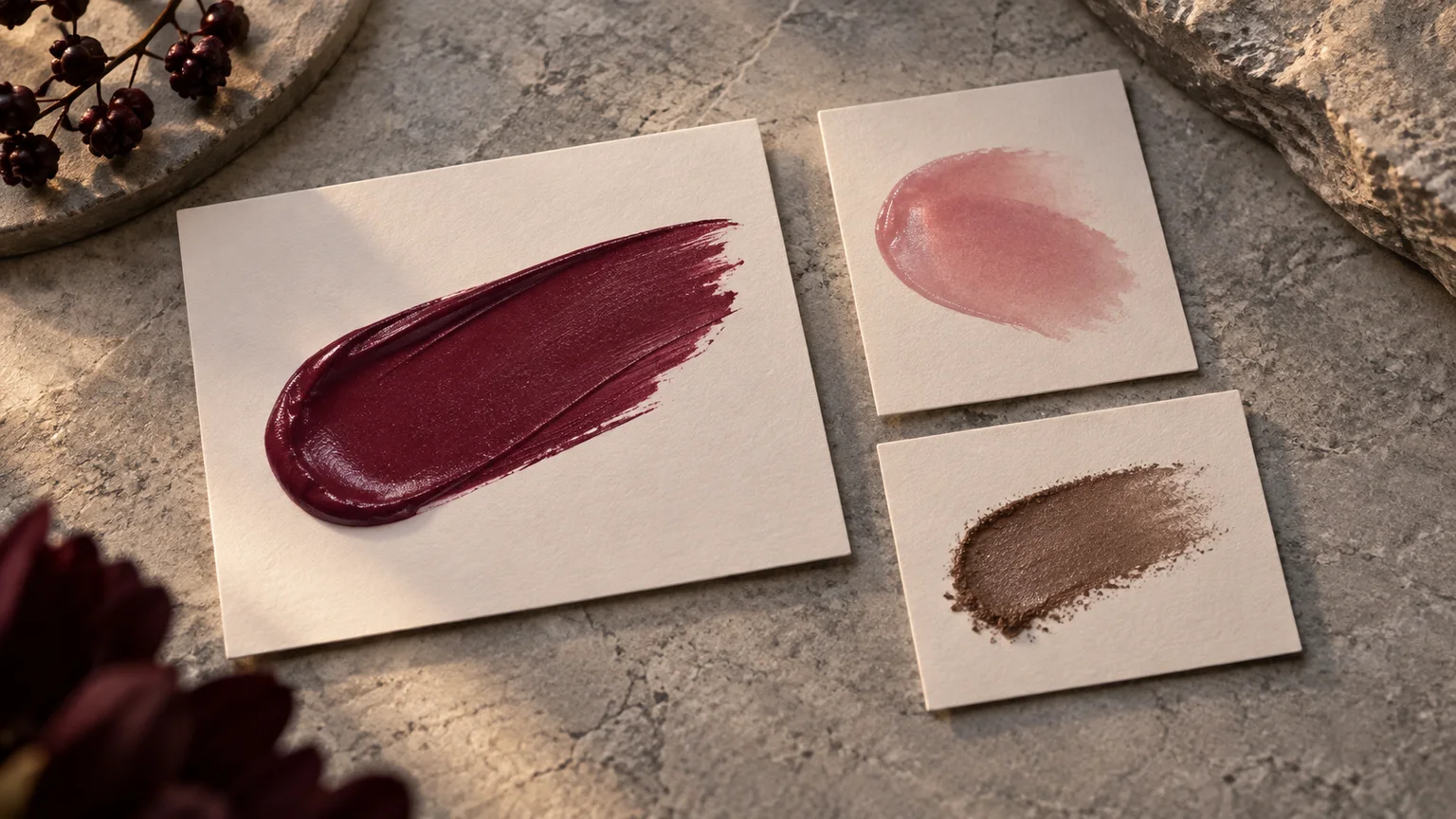
A brown-pink lip color may look different on naturally pigmented lips than it does on a pale product swatch. The finished color comes from the product's hue, its coverage and the lip color showing beneath it. That difference is not a flaw to erase before makeup can begin.

Start with the Coverage You Want

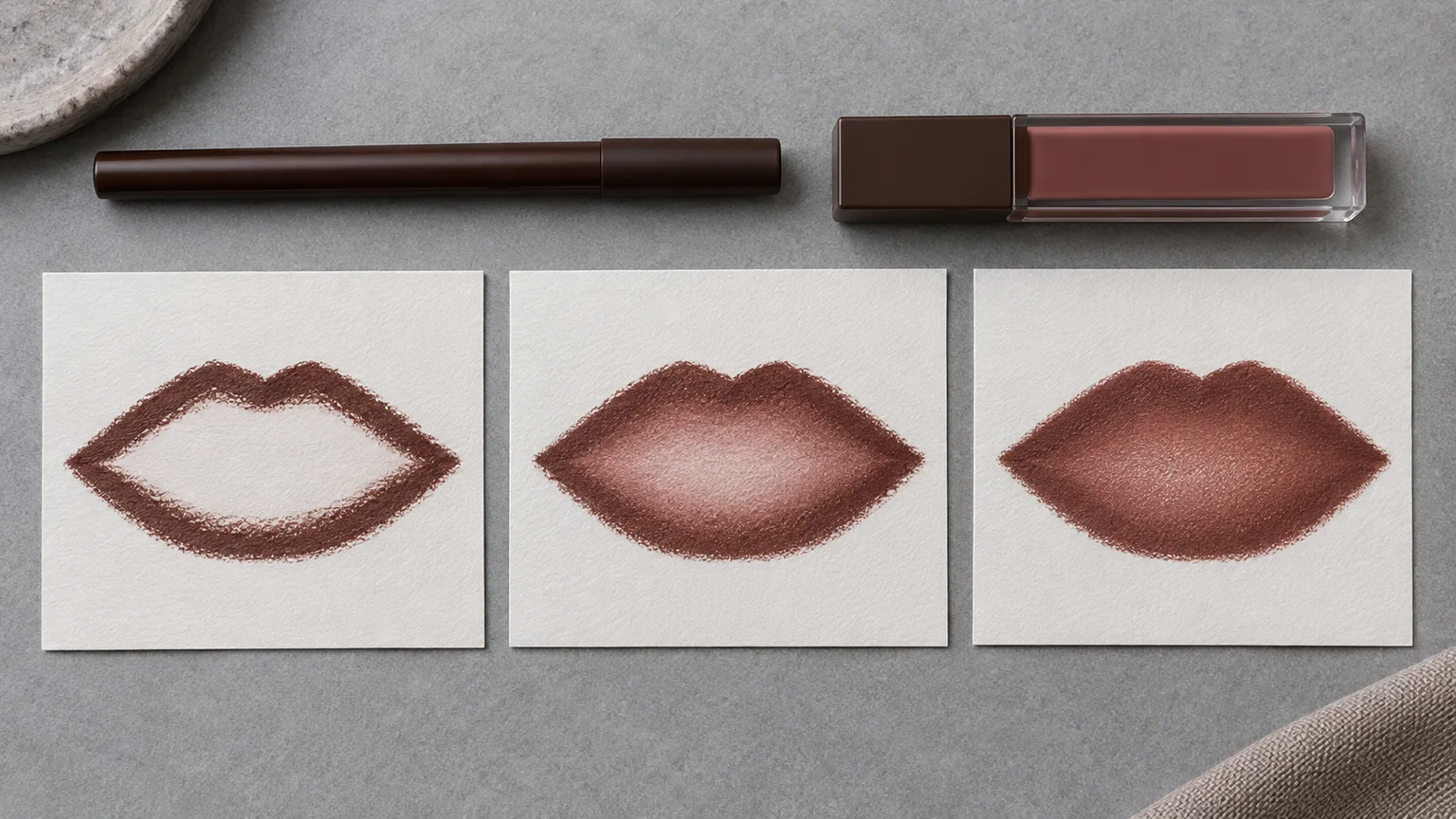
Decide whether you want the natural variation of the lips to remain visible. A sheer product can let that variation contribute to the look. A more opaque product may give a more uniform color, but a shade name alone does not tell you which result to expect.

Apply the product according to its directions and inspect both the upper and lower lip. They may not have identical natural pigment, so the same application can read differently on each. Check the whole relaxed mouth, not only the brightest part of the lower lip.

Compare Before Adding More

If the color looks cooler, warmer or less pink than expected, pause before adding several layers. More product may increase coverage without changing its underlying color in the way you want. Consider a different shade or formula if the desired result depends on a different relationship with your lip color.

Keep the Border in Context

A liner is optional. If you use one, judge its color alongside the finished lip rather than assuming that every brown-pink shade needs a dark border. Note whether you preferred the visible natural variation, a more even application or a defined edge. Those observations make the next comparison more useful than a generic nude recommendation.

Questions About This Edit

Do naturally pigmented lips need a pale base before lipstick?

No. Preserving natural lip color is a valid cosmetic preference. Choose the intended coverage rather than treating variation as something that must be hidden.

Will extra layers always make a lip tint pinker?

No. Additional layers can change coverage and intensity, but they do not guarantee the hue you expected from a swatch. Follow the product directions and compare the result.

Explore the makeup studio | Read the beauty guides

Story

One color, used twice, can make makeup feel intentional

One color, used twice, can make makeup feel intentional

One color, used twice, can make makeup feel intentional

On deeper skin, I do not trust vague glow language. I look at edges, undertone, flashback, and what happens near the mouth. For this one, the useful phrase is monochrome makeup, but the real test is simpler: does the color still belong to the face once the window light gets involved?

What I Check First

I start by taking down one variable. A clean base needs dusting, not blanketing. One focal point per face; today the lip wins and the cheek applauds quietly. Restraint is what separates a look from a costume.

My working assumption: place pigment where the face already has shape, then stop before the product becomes the point.

What I Actually Rebuy

Daylight first. Powder less. Let one feature lead.

  • monochrome makeup
  • How it survived the day
  • A finish with movement

Look

Brown mascara makes some faces look more awake

Brown mascara makes some faces look more awake

Brown mascara makes some faces look more awake

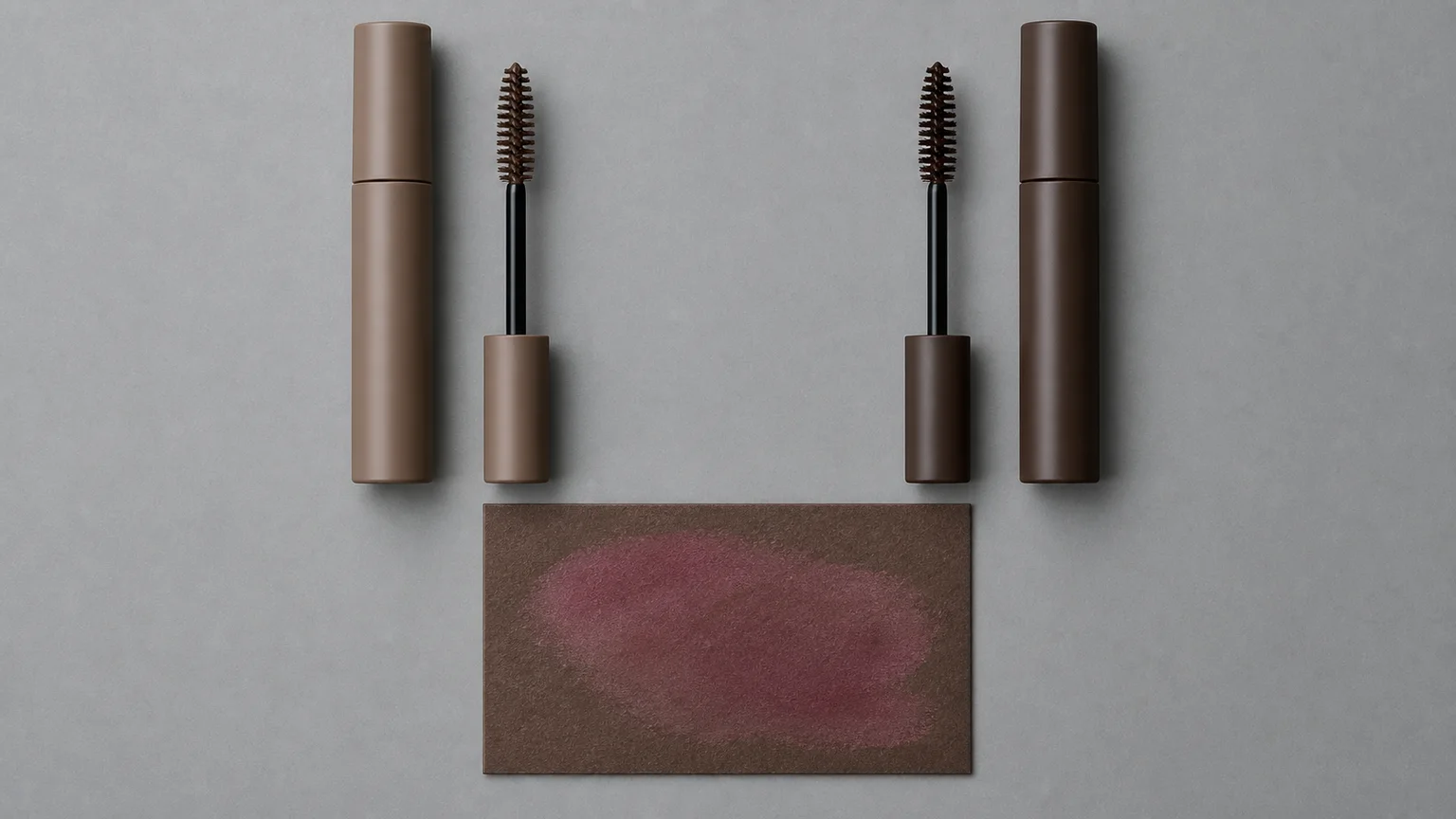
On deeper skin, I do not trust vague glow language. I look at edges, undertone, flashback, and what happens near the mouth. For this one, the useful phrase is brown mascara, but the real test is simpler: does the color still belong to the face once the window light gets involved?

What I Check First

I start by taking down one variable. When skin is good, powder gets one small job near the T-zone and nothing else. If the lip line is doing the work, I soften the cheek. If every feature is the main character, none of them is.

My working assumption: place pigment where the face already has shape, then stop before the product becomes the point.

Still Here After A Year

Daylight first. Powder less. Let one feature lead.

  • brown mascara
  • The commute test
  • Something that survives a mirror check

Routine

My powder map is smaller than it used to be

My powder map is smaller than it used to be

My powder map is smaller than it used to be

On deeper skin, I do not trust vague glow language. I look at edges, undertone, flashback, and what happens near the mouth. For this one, the useful phrase is powder placement, but the real test is simpler: does the color still belong to the face once the window light gets involved?

What I Check First

I start by taking down one variable. Fresh base, barely-there powder — and never where expression lives. Strong lip, quiet cheek — the two negotiate, they never shout together. Restraint is what separates a look from a costume.

The shortcut I trust: place pigment where the face already has shape, then stop before the product becomes the point.

What Survived The Cull

Daylight first. Powder less. Let one feature lead.

  • powder placement
  • Evening wear check
  • The un-done finish

Review

Undertone is the edit before the shade

Undertone is the edit before the shade

Undertone is the edit before the shade

On deeper skin, I do not trust vague glow language. I look at edges, undertone, flashback, and what happens near the mouth. For this one, the useful phrase is olive undertone makeup, but the real test is simpler: does the color still belong to the face once the window light gets involved?

What I Check First

I start by taking down one variable. I powder the least movable real estate and let the rest breathe. When the lip leads, the cheek steps back to a whisper. When everything competes, the face starts looking edited in the wrong direction.

The line I keep repeating: place pigment where the face already has shape, then stop before the product becomes the point.

What Earned Its Place

Daylight first. Powder less. Let one feature lead.

  • olive undertone makeup
  • How it held up outside
  • A finish that behaves like skin

Story

The evening face I keep sheer at the center

The evening face I keep sheer at the center

The evening face I keep sheer at the center

On deeper skin, I do not trust vague glow language. I look at edges, undertone, flashback, and what happens near the mouth. For this one, the useful phrase is evening makeup, but the real test is simpler: does the color still belong to the face once the window light gets involved?

What I Check First

I start by taking down one variable. When skin is good, powder gets one small job near the T-zone and nothing else. One focal point per face; today the lip wins and the cheek applauds quietly. Overworked faces do not look richer; they look negotiated.

After a season of testing: place pigment where the face already has shape, then stop before the product becomes the point.

The Keepers

Daylight first. Powder less. Let one feature lead.

  • evening makeup
  • The after-hours verdict
  • Texture over coverage

Look

A lip line can be quiet and still do the work

A lip line can be quiet and still do the work

A lip line can be quiet and still do the work

On deeper skin, I do not trust vague glow language. I look at edges, undertone, flashback, and what happens near the mouth. For this one, the useful phrase is lip liner placement, but the real test is simpler: does the color still belong to the face once the window light gets involved?

What I Check First

I start by taking down one variable. Fresh base, barely-there powder — and never where expression lives. Strong lip, quiet cheek — the two negotiate, they never shout together. Too many focal points and the face reads like a draft nobody approved.

What finally worked: place pigment where the face already has shape, then stop before the product becomes the point.

What I Would Buy Again

Daylight first. Powder less. Let one feature lead.

  • lip liner placement
  • Wear through a full day
  • Nothing that looks applied

Routine

SPF reapplication without ruining the base

SPF reapplication without ruining the base

SPF reapplication without ruining the base

On deeper skin, vague instructions are not enough. I watch undertone, flashback, the mouth line, and how glow behaves when the face turns. An SPF reapplication starts with conditions: damp air, dry air, commuting, reapplication, and makeup that has already lived a little.

The Part I Do Not Skip

I adjust weight first, timing second, and the number of products last. Most seasonal problems are texture problems before they are shopping problems.

The point is to keep the face comfortable while the day changes around it.

Keep This

  • SPF reapplication
  • Daylight or close-up check
  • One practical adjustment before buying anything new

Look

The brown lip line that looks deliberate in daylight

The brown lip line that looks deliberate in daylight

The brown lip line that looks deliberate in daylight

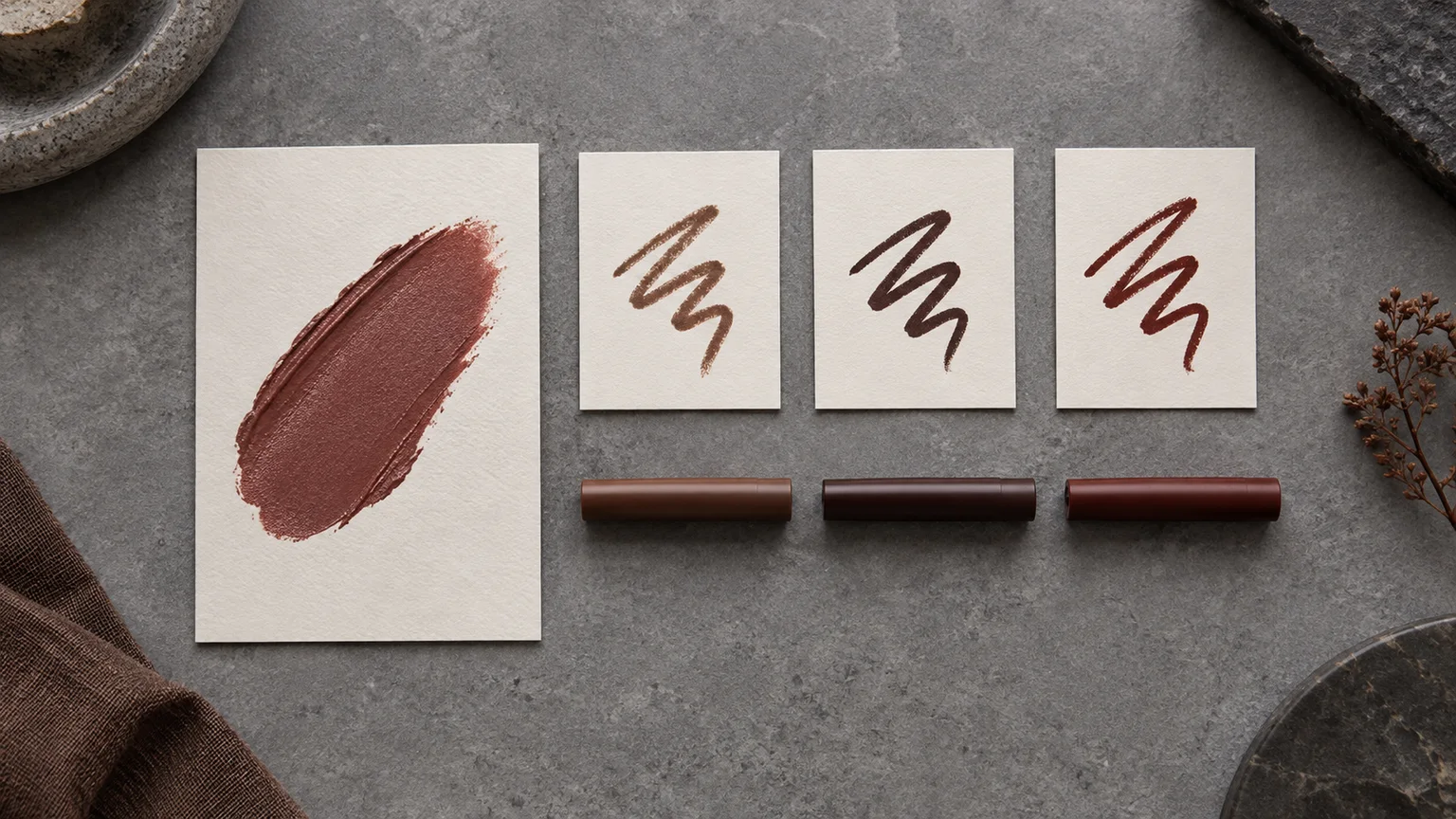
On deeper skin, vague instructions are not enough. I watch undertone, flashback, the mouth line, and how glow behaves when the face turns. The phrase brown lip liner is useful only if it leads to a better decision in daylight.

The Part I Do Not Skip

I start with placement before color. If the base is already reflective, I keep blush quieter. If the lip is structured, I let the skin stay softer. The face should read as considered, not corrected.

One feature can lead. Everything else should make that choice easier to believe.

Keep This

  • brown lip liner
  • Daylight or close-up check
  • One practical adjustment before buying anything new

Story

A deep-skin base note: glow is placement, not shine

A deep-skin base note: glow is placement, not shine

A deep-skin base note: glow is placement, not shine

On deeper skin, vague instructions are not enough. I watch undertone, flashback, the mouth line, and how glow behaves when the face turns. The phrase deep skin tone makeup is useful only if it leads to a better decision in daylight.

The Part I Do Not Skip

I start with placement before color. If the base is already reflective, I keep blush quieter. If the lip is structured, I let the skin stay softer. The face should read as considered, not corrected.

One feature can lead. Everything else should make that choice easier to believe.

Keep This

  • deep skin tone makeup
  • Daylight or close-up check
  • One practical adjustment before buying anything new