Short answer
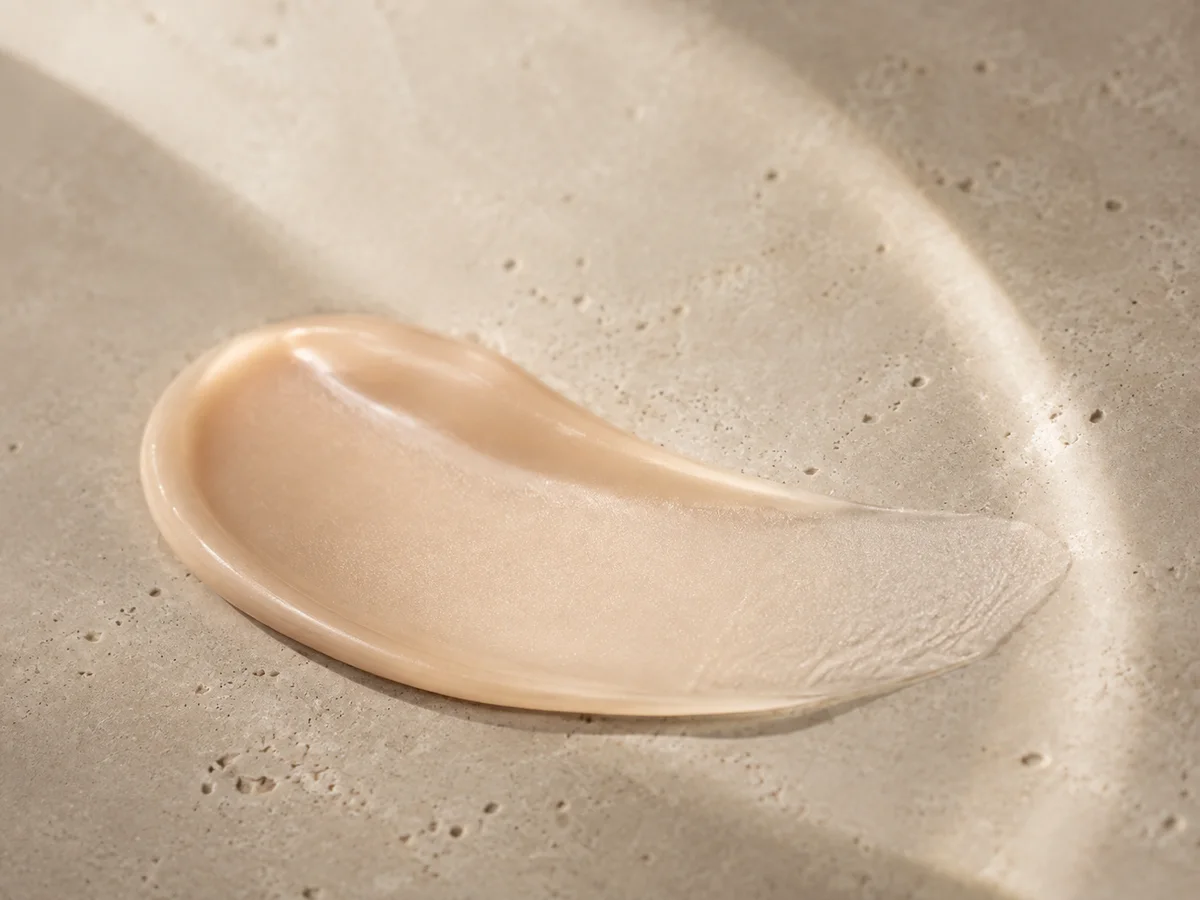
Luminous finish describes a cosmetic surface that reflects visible light more broadly than a matte one. The reflection may appear across a base, cheek, lip or other color product, with or without obvious sparkle. The term does not prove hydration, skin health, wear time or suitability. Observe the finished product rather than reading glow as an outcome claim.
Read the reflection
Apply the product according to its directions and record amount, tool and surrounding layers. Turn toward and away from neutral light. Look at the size of highlights, whether color remains visible beneath them and whether the reflection is even. A concentrated highlight, scattered shimmer and broad luminous sheen are different visual effects even when marketing groups them together.
Do not require glow only on high points. Placement is a style choice, not a face-shape rule. One person may prefer reflection across the base while another keeps the center softer-matte. Humidity does not automatically require less product; compare the actual finish and setting before changing amount.
Separate finish from evidence
A luminous photograph can be created or exaggerated by lighting, skin preparation, filters and camera processing. It cannot establish comfort or duration. Compare the product in real light and keep the conclusion specific to the formula and application. A more reflective finish is not inherently younger, healthier or more expensive-looking.
Common questions
Does luminous finish mean the formula contains shimmer? Not always. Inspect the product and visible surface; broad reflection can occur without distinct sparkle.
Does luminous finish prove hydration? No. Reflection is a visual property and should not be converted into a skin-condition claim.
Sources: FDA Cosmetics Labeling Guide and FDA cosmetics labeling claims.
Compare Satin Finish | Learn makeup placement | Explore makeup