Published on August 24, 2026, by Coyglow Editorial Studio — 1 min read
Edit For A Moment, Not A Category
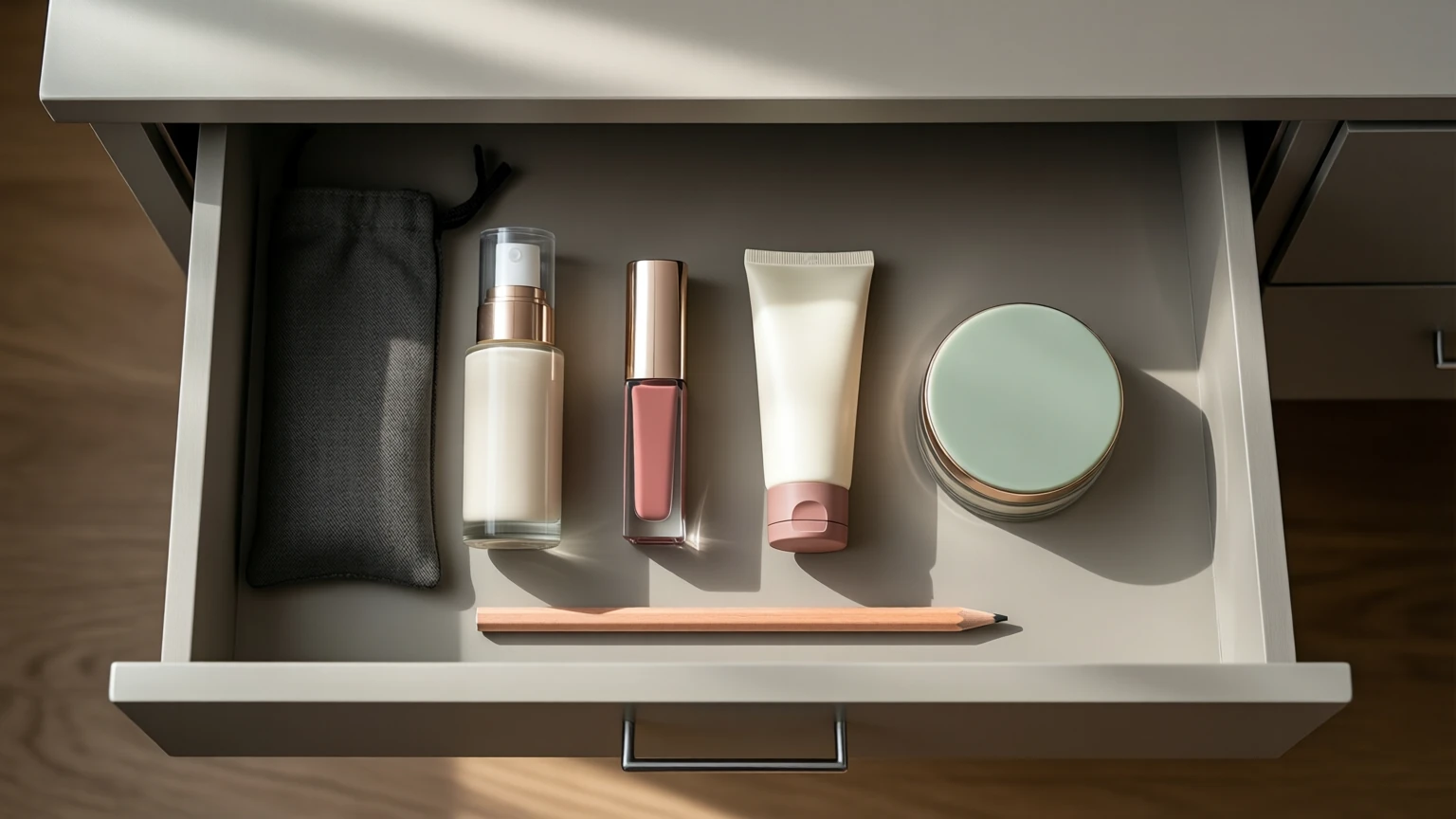
Do not begin with a miniature version of the bathroom shelf. Begin with the moments that actually happen: a lip color after lunch, a nail edge that catches, a meeting that changes the mood, or no beauty interruption at all. A drawer becomes useful when every item answers one recognizable moment rather than representing an entire category.
One Role Per Item
Give each product a plain assignment. Lip color is for restoring a chosen color. A small nail tool is for one specific maintenance task. A mirror supports a visual check; it does not create a need to correct. If two products have the same assignment, choose the one whose format, closure, and method make more sense at the desk.
Respect The Setting
A workplace edit should be discreet to open, simple to close, and realistic about mirrors, sinks, clean hands, tools, and time. Packaging matters here as much as the beauty idea. Anything prone to leaking, scattering, staining, or requiring a private ritual may be excellent elsewhere and still wrong for a drawer.
Run A Quiet Two-Week Test
Place the smallest plausible edit in the drawer and notice what is actually used. Do not add items during the test unless a new, repeated moment appears. At the end, keep the useful pieces, return the untouched pieces home, and notice whether the empty space itself made the drawer easier to use.
The Coyglow Edit
The most elegant desk drawer is not the most complete one. It is the one that lets a real beauty decision happen quickly and cleanly, then disappears back into the day. Pack the moment, secure every closure, and let each product earn the space it occupies.
About Coyglow Editorial Studio
Coyglow Editorial Studio writes beauty guidance across skin, makeup, nails, routine design, product literacy, creator culture, and community commerce.